Digital PR case study · Pearl Lemon's own campaign

From forgotten stories to eight published features and seven editorial links.

We gave ChatGPT something more useful than a media list: years of real business experience, original source material and a way to check what could be said. Then we built a PR process around what journalists actually wanted to publish.

Over a 21-day period, the programme produced eight documented pieces of editorial coverage across seven publications. Seven contained a live, verifiable link. Here's how the work happened—and what it could mean for a business with a story worth telling.

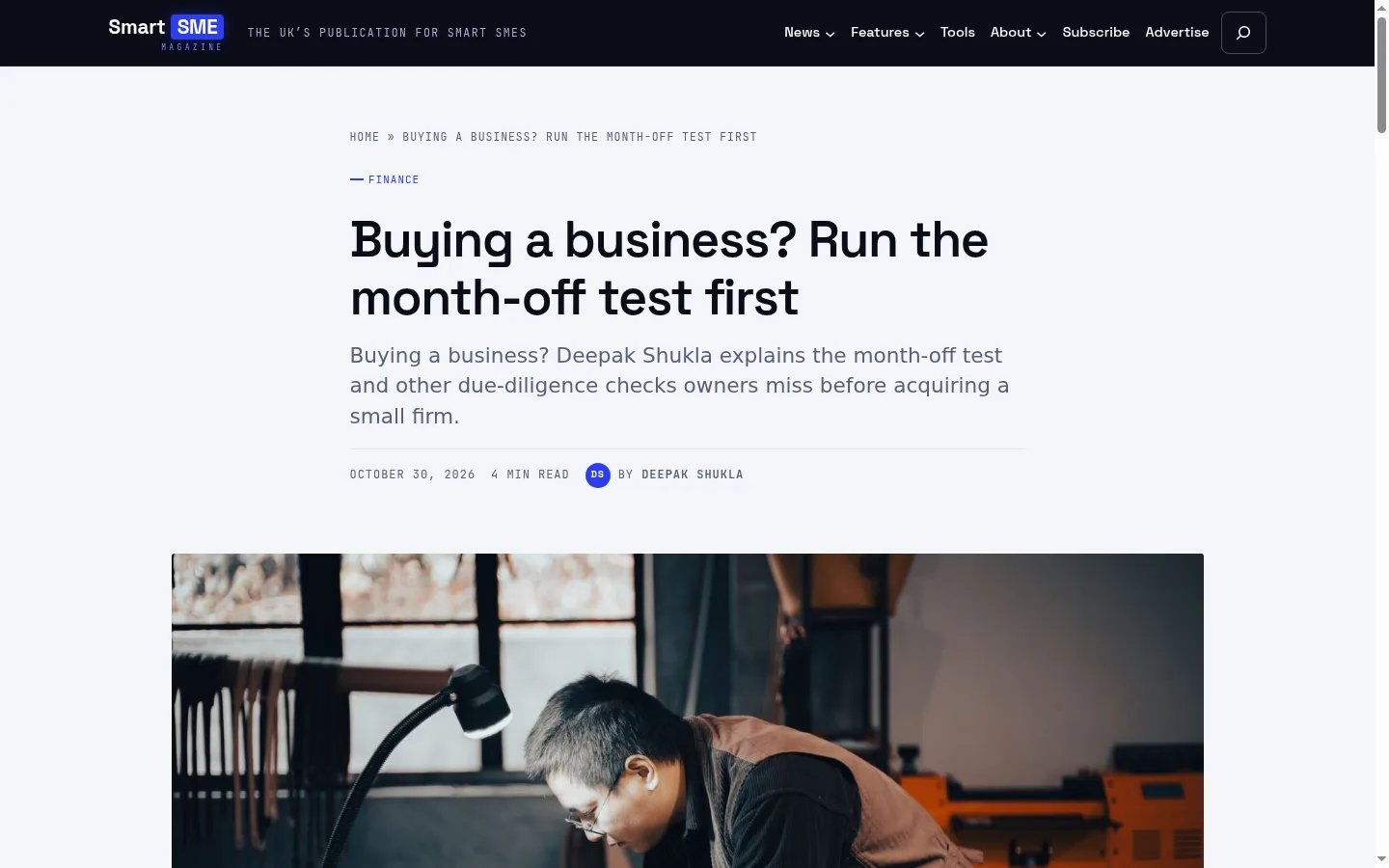
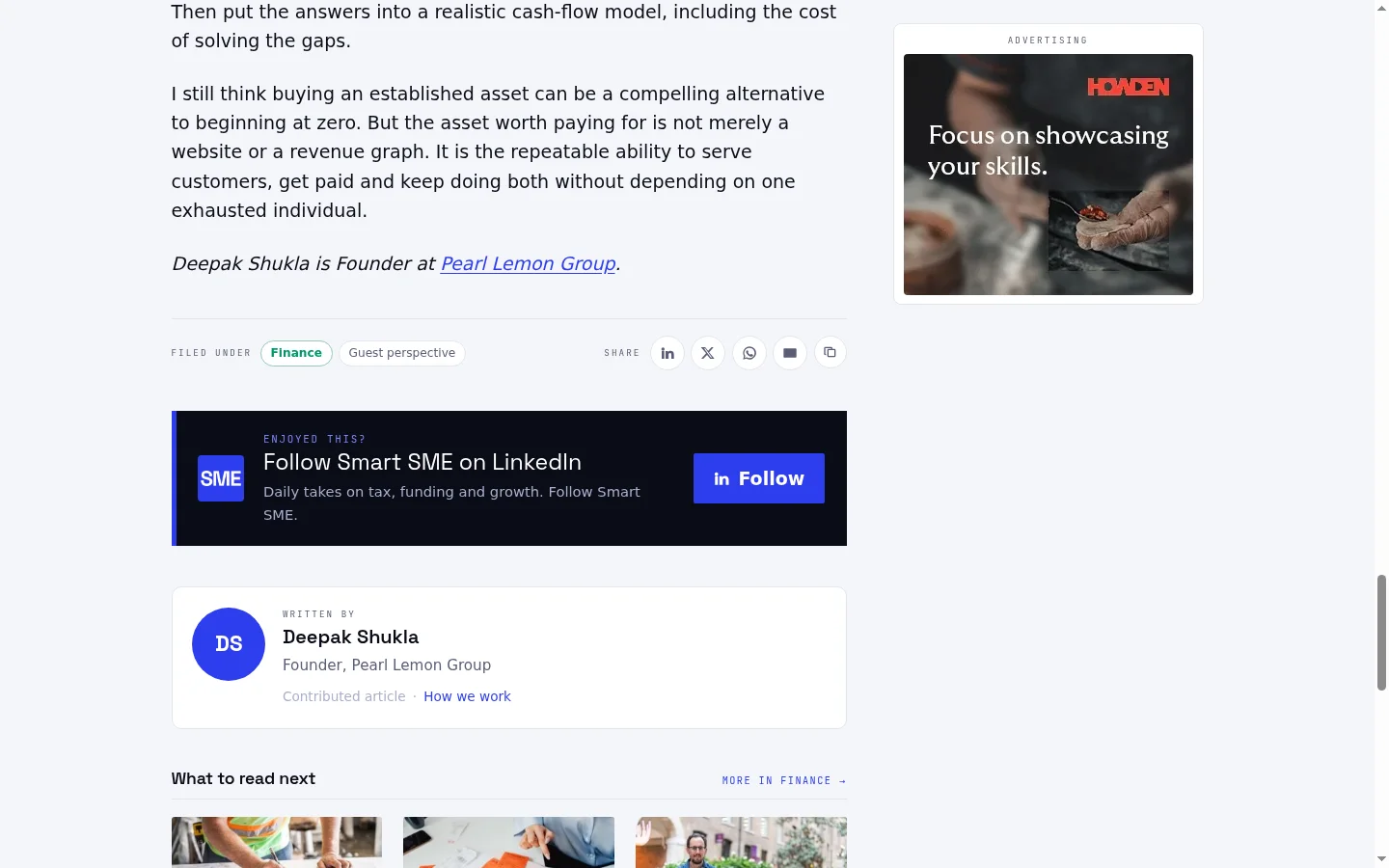
Actual Smart SME article by Deepak Shukla, published 30 October 2026
One of the actual results: a bylined article in Smart SME with a clickable link to Pearl Lemon. Real publisher page, not a mock-up.
8

Published editorial pieces

7

Verified clickable links

6

Linking publisher domains

21

Days in the observed period

13 October–3 November 2026. These were Pearl Lemon's internal, evolving PR operations, not a client campaign or a controlled AI experiment. Three links carry an explicit nofollow attribute; commercial impact has not yet been attributed.

The challenge

The stories were already there. The system to find them wasn't.

There is a particular frustration in public relations: you know you have something worthwhile to say, but the right journalist never hears it. Or the request arrives, the deadline is short, and the best example is buried in a document you haven't opened for years.

Pearl Lemon had plenty of material. A founder who had built and operated businesses across different industries. Lessons from hiring, marketing, hospitality and cash flow. Old diaries from extraordinary journeys. Original photographs. Previous conversations with editors. Some were recent; some went back more than a decade.

But an archive is not a PR campaign. Journalists don't want a biography pasted into their inbox. They want a particular answer, from someone who can genuinely give it, delivered in the format they need.

So we started with a different question: could we make all that first-hand knowledge searchable, useful and safe to share, then connect it to real editorial demand?
What happened

Three very different stories. One principle: give the editor something real.

The evidence wasn't limited to marketing commentary. It ranged from a practical business-acquisition lesson to a travel diary written in 2009. That range is precisely why the knowledge system mattered.

Story 01 · Business

The small-business test that earned a Smart SME feature.

Imagine buying a business that looks profitable—until its founder takes a month off. Sales slow, decisions stall and you discover how much of the operation depends on one person.

That was the useful idea behind our article for Smart SME. The publication wanted an original, practical piece for business owners, not a company advert. We developed the month-off test into a complete founder article, supplied it in the requested format and followed the editor's guidance.

It ran on 30 October, with the founder byline and a live link to pearllemon.com. The link was an editorial credit to the source of the insight, rather than a keyword-stuffed request.

Read the published article

Smart SME page showing the article's live link to Pearl Lemon
Published article and original on-page company link, inspected 3 November 2026.

Story 02 · First-person travel

A diary from Bolivia became a story worth citing 17 years later.

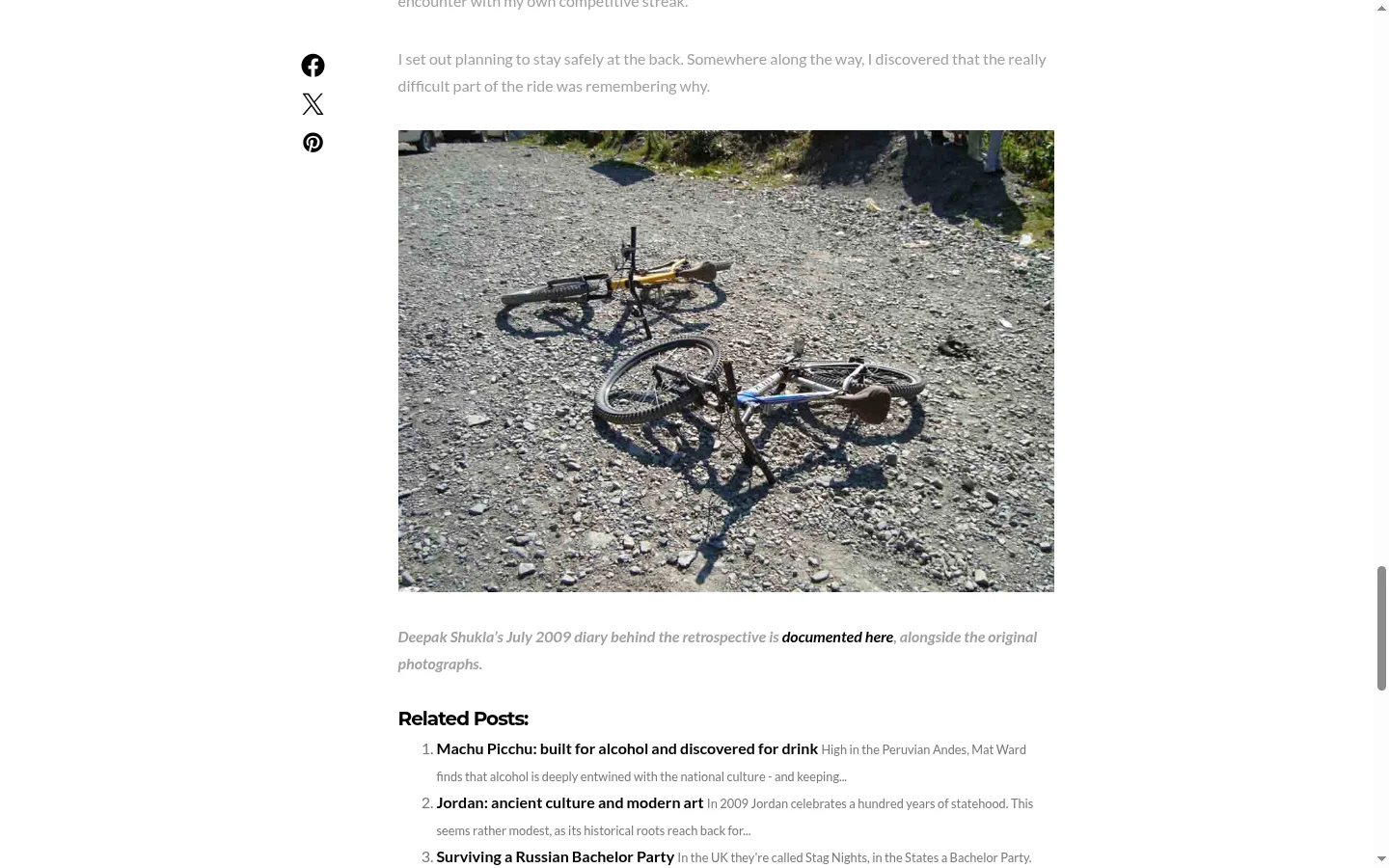
In July 2009, Deepak cycled Bolivia's Death Road and wrote down what happened. The interesting detail wasn't the road's reputation. It was the uncomfortable realisation that his own competitiveness was making the ride more dangerous.

When a relevant Travelmag editorial opportunity arose, that original account gave us a story with texture and a primary source. We pitched a retrospective, supplied the photographs and worked with the editor on a scene-led version for readers.

Travelmag published it on 1 November and linked directly to the original diary on Deepak's website. The citation made sense because readers could explore the account behind the feature.

Read the Travelmag feature

Travelmag's contextual source link to the founder's original Bolivia diary
The published feature links to a dated first-person record—not a commercial landing page.

Story 03 · Technology

One practical security insight led to coverage—and another conversation.

Grayline Post asked small-business experts to explain a costly security mistake. We didn't pretend Deepak was a cybersecurity researcher. We offered an operator's observation: businesses give tools and integrations access to sensitive information, then forget who owns those permissions.

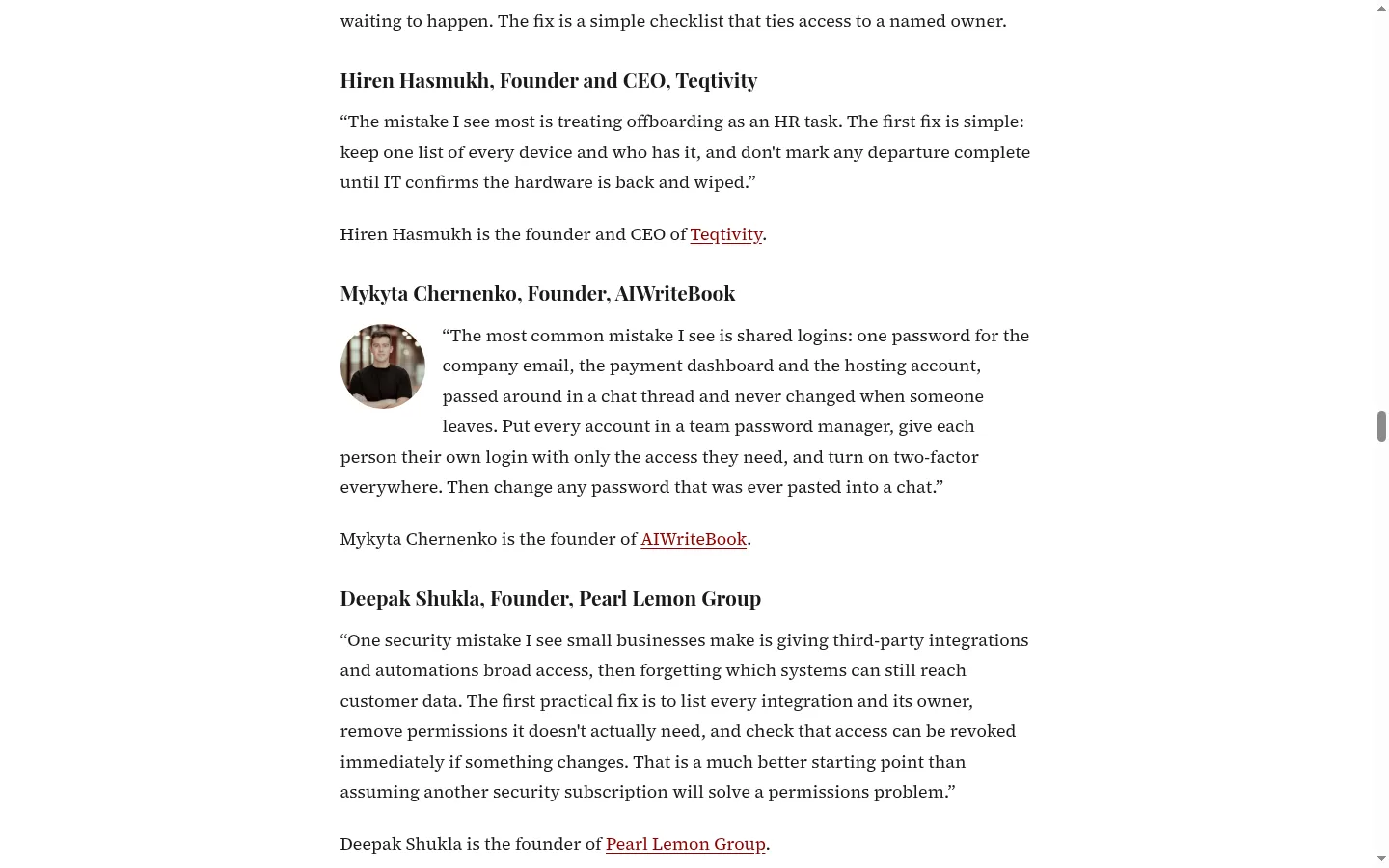
The editor used the contribution in a 31 October expert roundup, credited Pearl Lemon Group and linked to its website. On 2 November, the editor confirmed publication and invited a possible longer technology article. We responded with a specific idea about removing forgotten automation access when staff or suppliers leave.

The distinction matters: the original quote and link were published. The follow-on article was a promising editorial conversation—not a second result we could claim.

See the founder's published contribution

Grayline Post publisher screenshot showing Deepak Shukla's published security comment and Pearl Lemon Group attribution
Original public roundup, founder attribution and live company link.

Independent, checkable evidence

Every publication. Every link. No guessing.

Beyond those three examples, the same programme produced a written AI interview, expert-panel contributions and further business commentary. We list the full editorial record below, with links to the actual articles and the destination each publisher chose to cite.

Verified publication and outbound link details from the Pearl Lemon PR programme
Publisher and dateWhat was publishedWhere the link went
PR ON THE GO14 October 2026Great Examples of Social Impact ActivitiesExpert panelpearllemonpr.comPublisher marked this link nofollow
LeadersPerception23 October 2026Pearl Lemon Group's AI Reality: Automation With Human ReviewFounder interviewpearllemongroup.comPublisher marked this link nofollow
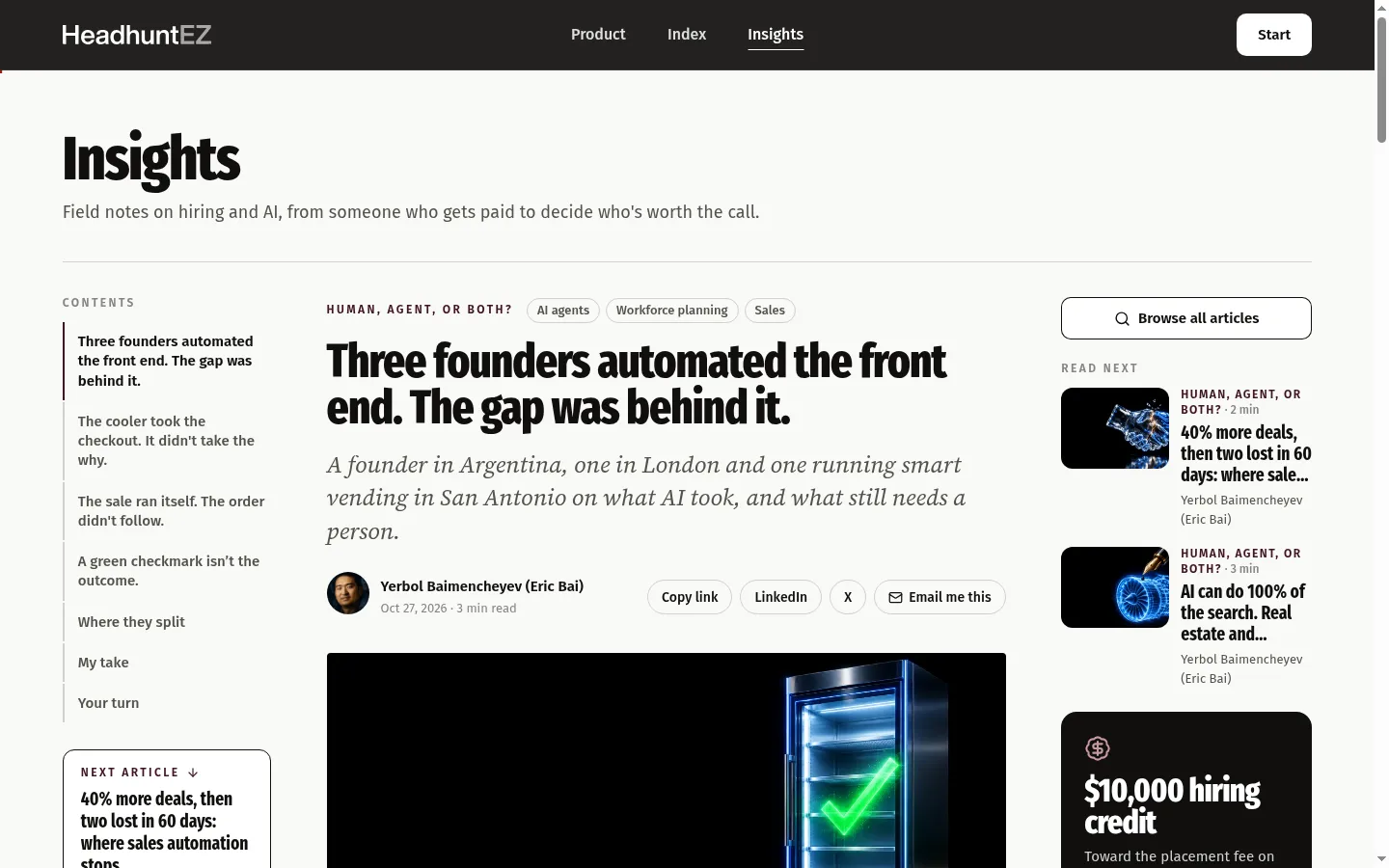
HeadhuntEZ Insights27 October 2026Three Founders Automated the Front End. The Gap Was Behind It.Founder expert rounduppearllemongroup.comNo nofollow attribute seen in the inspected anchor
PR ON THE GO29 October 2026What Kind of Content Is Best to Publish When You're Just Starting Out?Expert panelpearllemongroup.comPublisher marked this link nofollow
Smart SME30 October 2026Buying a Business? Run the Month-Off Test FirstOriginal bylined articlepearllemon.comNo nofollow attribute seen in the inspected anchor
Grayline Post31 October 202650 Experts on the Biggest Security Mistakes Small Businesses MakeExpert rounduppearllemongroup.comNo nofollow attribute seen in the inspected anchor
Travelmag1 November 2026The Most Dangerous Part of Bolivia's Death Road Wasn't the DropFirst-person featuredeepakshukla.com/worlds-dangerous-road-bolivia-2009No nofollow attribute seen in the inspected anchor
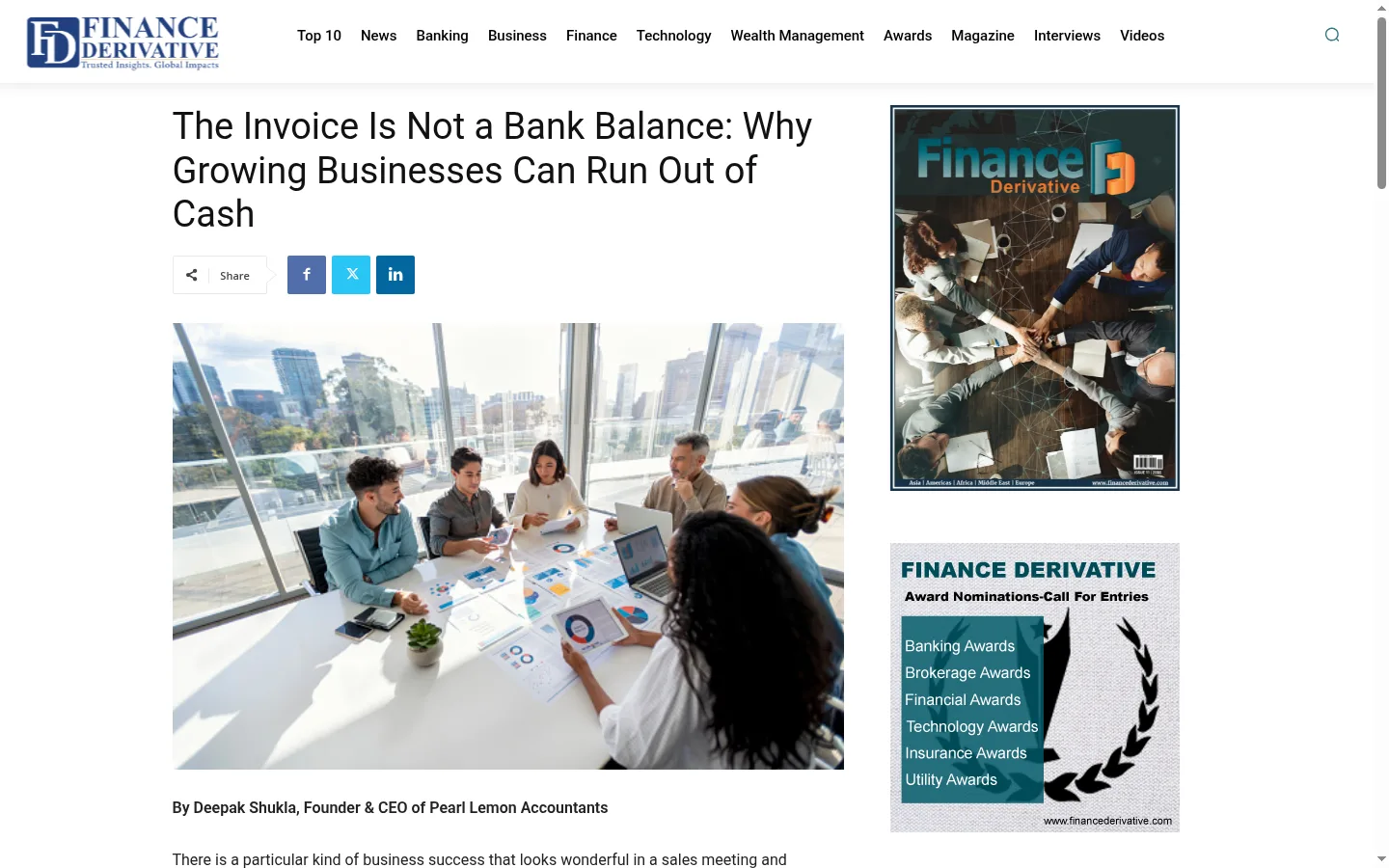
FinanceDerivative3 November 2026The Invoice Is Not a Bank BalanceOriginal contributed articlePublished editorial coverage; no matching company or founder link observed.

Eight dated pieces across seven publications, with seven actual linked references from six publisher domains. Three links were explicitly marked nofollow. We verified the pages and links during the 3 November 2026 review; this does not establish SEO ranking increases or incremental leads.

HeadhuntEZ published editorial feature about AI and accountable operations
HeadhuntEZ: an independent founder comment on AI and human responsibility.
FinanceDerivative original business article showing a published editorial feature
FinanceDerivative: original article accepted and published without a matching company hyperlink.
Smart SME published founder article screenshot
Smart SME: full bylined business article with source attribution.

Behind the coverage

What we built to make all that knowledge useful

We didn't give an AI a few company facts and ask it to invent expertise. We built a research and editorial workflow around real records, with permissions and checks to stop uncertain claims from slipping through.

The source library

Find the experience

A living Google Drive sourcebook and Notion knowledge hub organised business experience into 35 specialist lenses. We also assembled an indexed set of 82 first-party founder pages, historical venture records, topical source packs and a register of genuine photographs.

The custom ChatGPT layer

Choose the angle

Our private Pearl Lemon Press Command plugin, with specialist skills for press intelligence and founder-source matching, helped connect a genuine experience to a relevant journalist request or editor's interests. It did not turn unapproved claims into facts.

Editorial operations

Follow through

The team used the authorised Press inbox, actual editor correspondence and a shared opportunity ledger. Each piece moved through submission, requests for changes or images, publication, and independent link checks. A separate Cloudflare service supported research only—it was not an email-sending agent.

That distinction is commercially important. A useful PR system does more than find names and automate emails. It must know the difference between an original quote and a guess, between an editor's invitation and a published article, and between a brand mention and a hyperlink that is actually present on the page.

The system developed over the campaign period, and older publisher relationships helped some opportunities move forward. We're not claiming a particular plugin release single-handedly caused each publication. We're showing how a more organised, source-led way of working helped Pearl Lemon research, prepare and complete real editorial work.

Where many PR campaigns lose momentum

The pitch opens a door. Getting the story published takes the real work.

Some of the most instructive moments happened between the first reply and the finished article.

An editor wanted the submission through a portal.

PR ON THE GO already knew Pearl Lemon. But one October contribution got caught between an email response and the publication's preferred dashboard. Rather than treat the email as a completed submission, the team clarified the rules. The editor expressly agreed to accept the contribution by email; the expert panel went live on 29 October with a founder credit and a nofollow company link.

Read the live panel

Another editor asked for the finished manuscript and photographs.

Hospemag liked a hospitality angle, requested a non-promotional feature and specified the supporting images. A 788-word draft, founder portrait, two real event photographs and social details were supplied. At the 3 November evidence cut-off, it was still under editorial review. That's meaningful progress, but not another published feature.

Good PR also knows when not to claim a win.

FinanceDerivative published an original 916-word business article but did not include a matching company or founder hyperlink in our page check. Universal Traveller remained interested in a Lake Viverone travel feature but required genuinely human-authored final copy. A restaurant publisher offered guaranteed links in exchange for a £50 fee. We counted none of those as an additional free editorial link.

A prospective client deserves that distinction. It is far more useful to know what was actually delivered than to receive an impressive-looking list where pitches, offers, coverage and links are mixed together.

What this means for your business

You probably have more PR material than you realise. The question is whether anyone can turn it into a story.

Your best editorial opportunity might be a hard-won lesson from a customer project, an unusual founder journey, original research, a practical disagreement with how your industry works, or a question your team answers every week. It doesn't have to start with a grand launch announcement.

Our job is to find the strongest of those ideas, establish what can be evidenced, identify the publications whose readers would benefit and pursue an appropriate earned-media campaign. Then to report what was accepted, published and linked—with the evidence available for you to inspect.

That is the thinking behind our digital PR service and journalist relations work. We can propose a scope suited to your sector, the material you genuinely have, the audience you need to reach and the approvals your business requires.

Start with the story, not a backlink promise

Tell us what your business knows. We'll tell you where the editorial opportunity might be.

Share your business, your target market, your strongest proof and what you want PR to achieve. We'll assess the fit and outline a sensible campaign, without asking you to buy a vague guarantee of coverage or rankings.

Questions worth asking before you hire a digital PR agency

What did this digital PR case study actually achieve?

Eight independently retrievable editorial pieces were documented between 13 October and 3 November 2026, across seven publishers. Seven included clickable company or founder links from six publisher domains. Three links were explicitly marked nofollow. They are real references, not a claim of additional revenue or rankings.

Can you use AI to help with journalist outreach without sending generic pitches?

Yes, as long as the source material and editorial decisions are sound. We used ChatGPT-assisted matching and drafting with real founder experience, source records, verified publisher requirements and the authorised Press inbox. We did not rely on mass-sending generic pitches or inventing expertise.

Is this also a digital PR link building campaign?

It generated editorial links, including contextual source citations and founder/company attributions. The publishers decided whether and where to link. We distinguish ordinary links from nofollow links and do not offer guaranteed followed placements.

How do you choose a story for my business?

Start with your real experience, original research, specific lessons, credible people and questions your customers face. We check the evidence and editorial relevance before deciding which publications or journalists to approach.

Does an editor's positive response count as a placement?

No. A reply can be commercially promising, and a requested draft or photo package is meaningful progress, but we count published coverage only when an independent live publication is verified. A live hyperlink is checked separately.

Will earned media guarantee higher rankings or enquiries?

No. Editorial decisions, rankings and buyer behaviour are outside an agency's control. We can document the work and independently check outcomes, while referral traffic, qualified enquiries and search impact need their own measurement.

Evidence method: public article URLs, matching credited content, hyperlink destinations and available rel attributes checked on 3 November 2026. Historical material, source records and publisher correspondence were verified in authorised internal systems. The article count excludes prior-year features, paid placements, directory maintenance and unpublished manuscripts. The findings show editorial outcomes from an evolving first-party programme; they do not measure attributed referral sales or search-ranking impact.